
Published on May 31, 2026
We looked for a sleep policy in adult education. There isn't one.
The first strand of SereniSleep's research was the least glamorous and, it turned out, one of the most revealing. Between February and March 2026 the three partners mapped the policy landscape in their own countries: adult-education frameworks, mental-health strategies, workplace well-being rules, and anything that touched sleep.
The headline finding is a number: zero. No partner country has a dedicated sleep-health policy for adult-education settings.
That is not to say sleep is absent from every document. It appears occasionally, folded into general health promotion or workplace stress guidance. But as a factor in learning — in whether an adult can concentrate, retain, return next week — it is essentially unrepresented.
The gap matters because of what sits either side of it. Sleep science is well established. So is the evidence that sleep-deprived adults struggle to consolidate memory, regulate emotion and sustain attention. Adult educators see the consequences daily: drifting focus, irritability, absence, dropout. What is missing is any institutional bridge between the two.
Each country's research also surfaced its own texture. In Spain, the analysis pointed to migrant women and caregivers carrying compounded loads. In Bulgaria, to a culture of overwork — multiple simultaneous jobs, long hours extending even into retirement. In Serbia, to stigma around discussing sleep and mental health, and to uneven digital access outside cities.
These national differences became a design principle rather than a footnote. A single European sleep course, translated four ways, would have failed. What the evidence demanded was one shared framework adapted deliberately to each context — which is exactly what SereniSleep went on to build.
The consolidated desk research is published free on the Results page.
Share this article
Related articles
Published on September 1, 2026LTTA
🌙 A Week in Varna That Changed How We Teach Rest
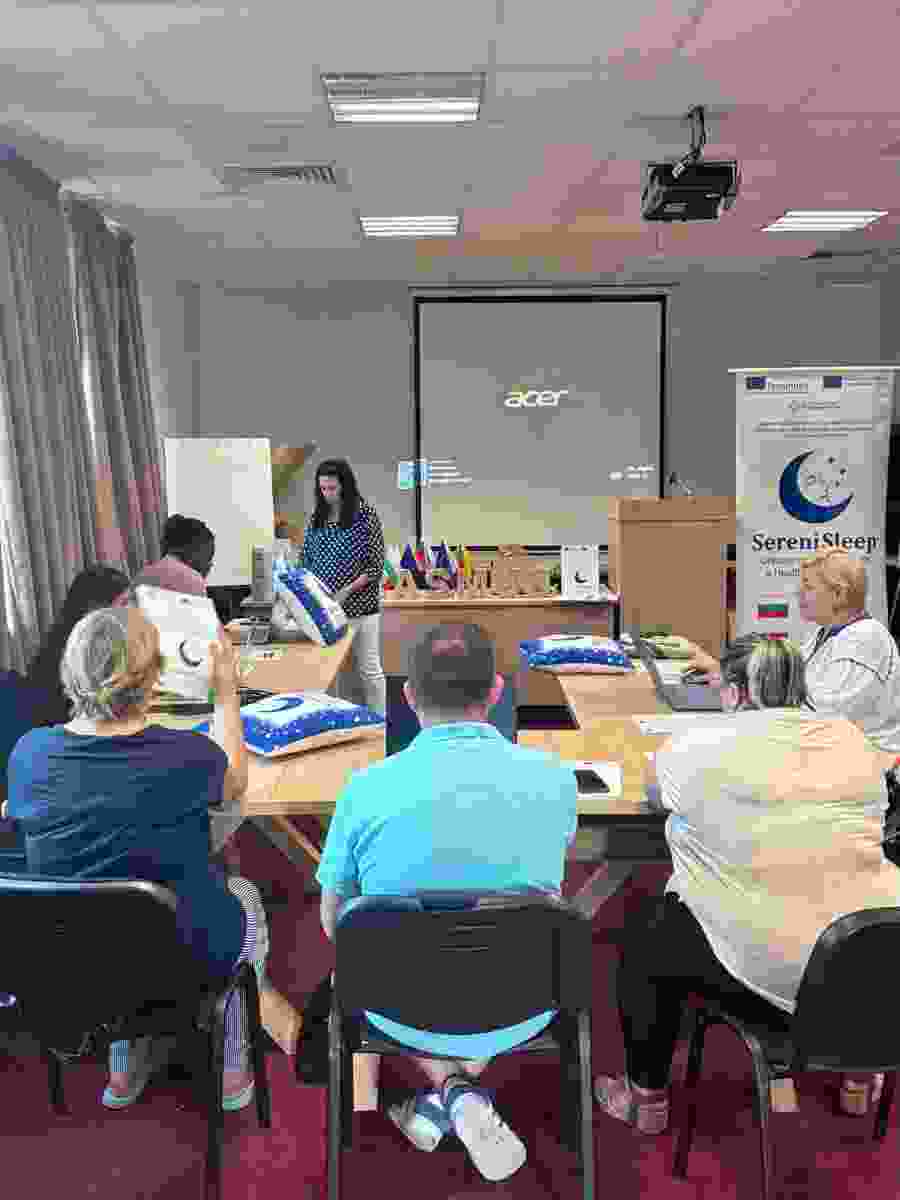
SereniSleep's Learning, Teaching and Training Activity brought nine educators from three countries to the Black Sea — and sent them home as certified ambassadors of sleep education. Varna, Bulgaria · 25–31 August 2026
Read more: 🌙 A Week in Varna That Changed How We Teach RestPublished on February 23, 2026
Three countries, one question: why are adult learners so tired?
SereniSleep began in Varna in February 2026 with a question few adult-education projects ask — what if exhaustion, not motivation, is the real barrier?
Read more: Three countries, one question: why are adult learners so tired?